St. Athanasius
of Alexandria: One Bishop Against an Empire
296 – 373
“For the Son of God became man so that we might become God.”
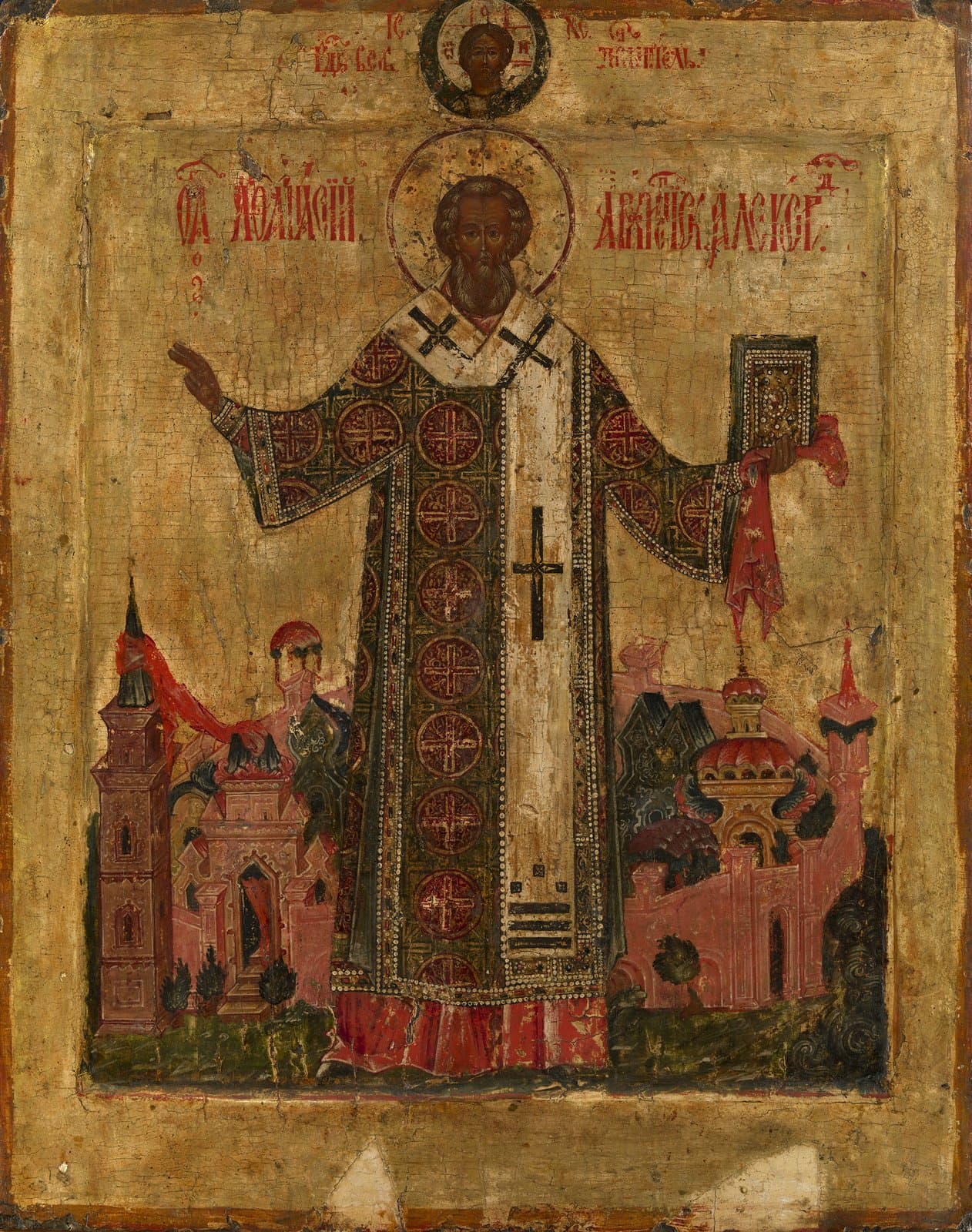
Saint Athanasius of Alexandria, Russian icon, anonymous painter, mid-17th century, private collection · Public Domain
Why He Matters
Athanasius held the line on the Church's core teaching about the divinity of Christ through five exiles and roughly half a century of political and theological pressure, at real personal cost. He matters because he shows that theological truth is worth defending patiently and persistently, even when nearly everyone with power says otherwise.
Virtue for Today
Doctrinal Courage
Try Today
Hold firmly to one truth you know is right today, even if it is currently unpopular to say so.
A Deacon at the Council of Nicaea
Athanasius was born around 296 in Alexandria, Egypt, then one of the intellectual and ecclesiastical centers of the Christian world. As a young deacon, he accompanied his bishop, Alexander of Alexandria, to the Council of Nicaea in 325, the first ecumenical council of the Church, called specifically to address the teaching of an Alexandrian priest named Arius, who held that the Son of God was a created being, not eternally and fully divine like the Father. Athanasius, though not yet a bishop himself, became one of the council's sharpest defenders of the position that was adopted as orthodox: that the Son is "of one substance" (homoousios) with the Father, fully and eternally God.
Bishop of a Divided Church
Athanasius succeeded Alexander as bishop of Alexandria in 328 and spent the following decades as the most determined and consistent opponent of Arianism, even as the heresy gained powerful supporters, including several Roman emperors who found its subordinationist theology politically convenient or who were persuaded by its more moderate-sounding proponents. Athanasius's uncompromising insistence on the Nicene formula made him a repeated target: he was deposed and exiled from his own see at least five times over roughly forty-five years of episcopal ministry, on charges ranging from politically motivated accusations of violence and sorcery to straightforward doctrinal disagreement with whichever emperor was in power at the time.
Exiled Again and Again
Athanasius's exiles took him as far as Trier in Gaul and into hiding among the monks of the Egyptian desert, where he came to know and write about the monastic movement firsthand, producing an influential Life of St. Anthony that helped spread monasticism throughout the Christian world. Each time an emperor sympathetic to Arianism gained power, Athanasius was removed from Alexandria; each time political or theological winds shifted, he was restored, only to be threatened again. Through it all, he continued writing vigorously in defense of Nicene orthodoxy, producing theological works, including On the Incarnation, that remain foundational to Christian teaching on who Christ is. It's from this long, lonely persistence that later generations coined the phrase "Athanasius contra mundum" — Athanasius against the world — though the line was said of him by others, not a boast he made himself.
On the Incarnation
Among Athanasius's most enduring theological contributions is his teaching, developed in On the Incarnation, on why God became man at all: not merely to forgive sin in the abstract, but to restore and elevate human nature itself by uniting it to the divine. His famous formulation of this idea — that the Son of God became man so that human beings might be drawn into God's own life — became one of the most quoted lines in the history of Christian theology and remains central to Eastern and Western understandings of salvation alike.
Vindication and Legacy
Athanasius spent his final years in relative peace back in Alexandria, having outlasted the emperors who exiled him, and died there in 373. The Nicene faith he had defended through decades of hardship was formally reaffirmed at the Council of Constantinople in 381, just eight years after his death, vindicating the position he had held almost alone through its darkest years. He is honored as a Doctor of the Church and remembered as one of Christianity's most tenacious defenders of orthodox belief about who Jesus Christ truly is.
Helper
Reflection Questions:
- Athanasius held to a theological position for decades even when nearly the whole political and religious establishment around him had turned against it. Where do you find the courage to hold an unpopular but true position?
- He spent years in hiding and exile rather than compromise on something he believed was essential. What line would you refuse to cross, even at real personal cost?
- He used his years in the desert productively, writing a highly influential biography of St. Anthony rather than simply waiting out his exile. How do you use enforced downtime or setbacks in your own life?
- His teaching on the Incarnation says God became human so that humanity could be drawn into God's own life. How does that change how you think about your own dignity and destiny?
- Athanasius was eventually vindicated, but only after decades of struggle he did not live to see fully resolved. What are you being asked to remain faithful to without knowing when, or whether, you'll see it vindicated?
Short Prayer
“St. Athanasius, pray for us — that we may hold to what is true even when it costs us standing or comfort. Amen.”
Prayer to St. Athanasius of Alexandria
Prayer to St. Athanasius of Alexandria St. Athanasius, you were exiled again and again for refusing to soften the Church's teaching about who Jesus Christ truly is, standing firm through decades when it seemed like the whole world had turned against you. You never let hardship silence your defense of the truth, and you lived to see the faith you guarded formally vindicated. Pray for us when holding to what is true feels lonely or costly, that we might have even a portion of your patient courage. Help us trust, as your own theology taught, that Christ took on our humanity so completely that we might truly share in God's own life. St. Athanasius, pray for us. Amen.
Catholic Answers Magazine — "Athanasius Contra Mundum: The Courage to Act Alone"
Grow closer to God.
Agnioz is here to walk with you.
Register for FREE and unlock more Catholic content, prayers, and reflections to help you become a more enlightened Catholic — FREE FOREVER.


Let's grow together in faith, hope, and love. 🙏