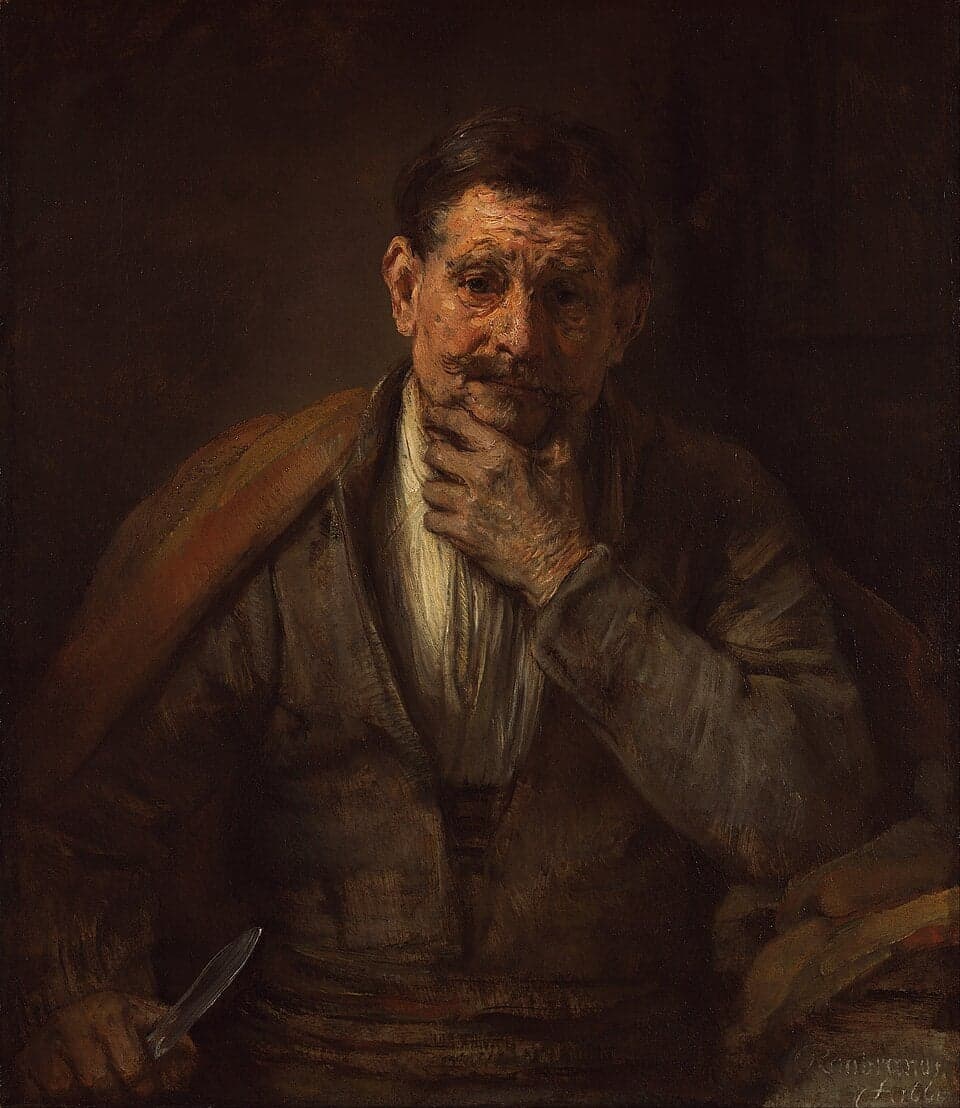
St. Bartholomew: The Apostle Jesus Saw Under the Fig Tree
“Rabbi, you are the Son of God! You are the King of Israel! — John 1:49”
Why He Matters
Bartholomew shows that honest doubt, brought directly to Christ rather than hidden away, can become the doorway to the clearest possible confession of faith.
Virtue for Today
Guilelessness — the honesty to voice real doubt and the openness to "come and see" rather than staying comfortably skeptical.
Try Today
Bring one honest doubt or unresolved question to prayer today, instead of setting it aside unspoken.
Under the Fig Tree: A Skeptic Named Nathanael
Bartholomew is barely mentioned by that name in the Gospels — he appears only in the bare apostle lists of Matthew, Mark, and Luke, always paired next to Philip and never given a single line of dialogue. But the Church has long identified him with a much more vivid figure from John's Gospel: Nathanael, a man from Cana in Galilee who gets an entire scene to himself, and whose introduction to Jesus is one of the most quietly striking encounters in the New Testament.
The identification rests on a simple piece of narrative logic. In John, Philip is the one who brings Nathanael to Jesus, exactly as Philip and Bartholomew are paired in the other Gospels' apostle lists; and Bartholomew — from the Aramaic bar-Tolmai, "son of Tolmai" — reads like a patronymic surname rather than a given name, the kind of tag that would naturally sit alongside a separate personal name like Nathanael. Put the two together, and the Church has traditionally read them as one man: Nathanael bar-Tolmai, called Bartholomew by the Synoptic Gospels and Nathanael by John.
"Can Anything Good Come Out of Nazareth?"
Whatever his name, his first recorded words are not exactly reverent. When Philip runs to tell him, "We have found him of whom Moses in the law and also the prophets wrote, Jesus of Nazareth, the son of Joseph," Nathanael's answer is blunt: "Can anything good come out of Nazareth?" (John 1:45-46). Nazareth was a small, unremarkable village with no scriptural pedigree of its own — no prophecy pointed there — and Nathanael says so, openly, to the very friend inviting him to come see for himself.
It would have been easy for this to be the end of the story: one more skeptic who talked himself out of an encounter before it happened. Instead, Philip simply answers, "Come and see" — and Nathanael goes. That single detail is worth sitting with. Whatever doubt he carried, he did not let it become an excuse to stay home.
Seen Before Being Known
What happens next is the heart of the whole account. As Nathanael approaches, Jesus says of him, before any introduction: "Behold, an Israelite indeed, in whom is no guile!" Startled, Nathanael asks how Jesus could possibly know anything about him. Jesus answers, "Before Philip called you, when you were under the fig tree, I saw you" (John 1:47-48).
Nothing in the text tells us what Nathanael was doing under that fig tree — praying, studying the Law, simply resting in the shade, we are never told. What matters is Nathanael's own reaction to being known that precisely, that privately, by a stranger from a town he had just dismissed. He does not ask for more evidence. He does not hedge. He answers with the single most direct confession of Christ's identity spoken by anyone in the Gospels this early in Jesus's ministry: "Rabbi, you are the Son of God! You are the King of Israel!" (John 1:49). The skeptic under the fig tree becomes, within the space of one conversation, one of the first people in the Gospels to say plainly who Jesus is.
To the Ends of the Earth: Armenia and Beyond
Scripture goes quiet on Bartholomew after this scene and his inclusion in the apostle lists, but the Church's ancient traditions do not. He is remembered as a missionary who carried the Gospel to some of the most distant edges of the known world reached by any of the Twelve — accounts differ and overlap across regions including Armenia, Mesopotamia, Ethiopia, and parts of India, reflecting how widely his memory was claimed by churches far from Judea within a few centuries of his death. The Armenian Apostolic Church in particular reveres Bartholomew, alongside St. Jude Thaddeus, as one of its own founding apostles — a tradition old enough and central enough that Armenian Christians still refer to their church as "Apostolic" in direct reference to these two.
A Martyrdom Remembered in the Body
Tradition holds that Bartholomew's missionary work in Armenia ended in a brutal martyrdom: flayed alive, and then, in most versions, beheaded. However exactly the details developed over centuries of retelling, the core memory — that his death involved his own skin being stripped from him — became so fixed in Christian art and imagination that Bartholomew is almost always depicted in later paintings and sculpture holding his own flayed skin, most famously in Michelangelo's Last Judgment in the Sistine Chapel, where the artist even painted his own tormented face onto the skin Bartholomew carries. Because of this tradition, he became the patron saint of tanners, leatherworkers, and others whose trade involves skin and hide — an odd, almost literal kind of patronage, but one the Church has kept for centuries as a way of never letting his martyrdom be forgotten.
Helper
Reflection Questions:
- Nathanael voiced his doubt honestly ("Can anything good come out of Nazareth?") rather than hiding it, and still went to "come and see." What doubt have you been sitting on instead of bringing honestly to God?
- Jesus knew Nathanael specifically and privately, "under the fig tree," before they had ever spoken. Where do you sense God already knows something true about you that you haven't said out loud?
- Bartholomew's confession came fast and complete once he was truly seen. Has an experience of being deeply known ever changed the pace of your own faith?
- Tradition says he carried the Gospel to some of the farthest reaches of the known world. What is the farthest, most uncomfortable "edge" — geographic or personal — where you sense you're being asked to bring your faith?
Short Prayer
“St. Bartholomew, you brought your doubt to Christ and were known by him before you even spoke. Help me bring my own honest questions to him without fear. Amen.”
Prayer to St. Bartholomew
St. Bartholomew, apostle who doubted before you believed, you did not let your skepticism keep you from Christ, but let it lead you to "come and see" for yourself. You were known completely before you were ever understood, and your honest doubt became the clearest confession of faith among the first disciples. Obtain for me the courage to bring my own unresolved questions honestly to God, the same faithfulness that carried you to the ends of the earth to proclaim him, and the same willingness to suffer everything, even to the end, for the truth you found under that fig tree. Amen.
Grow closer to God.
Agnioz is here to walk with you.
Register for FREE and unlock more Catholic content, prayers, and reflections to help you become a more enlightened Catholic — FREE FOREVER.


Let's grow together in faith, hope, and love. 🙏