St. Damien
of Molokai: The Priest Who Became "We Lepers"
1840 – 1889
“I make myself a leper with the lepers, to gain all to Jesus Christ.”
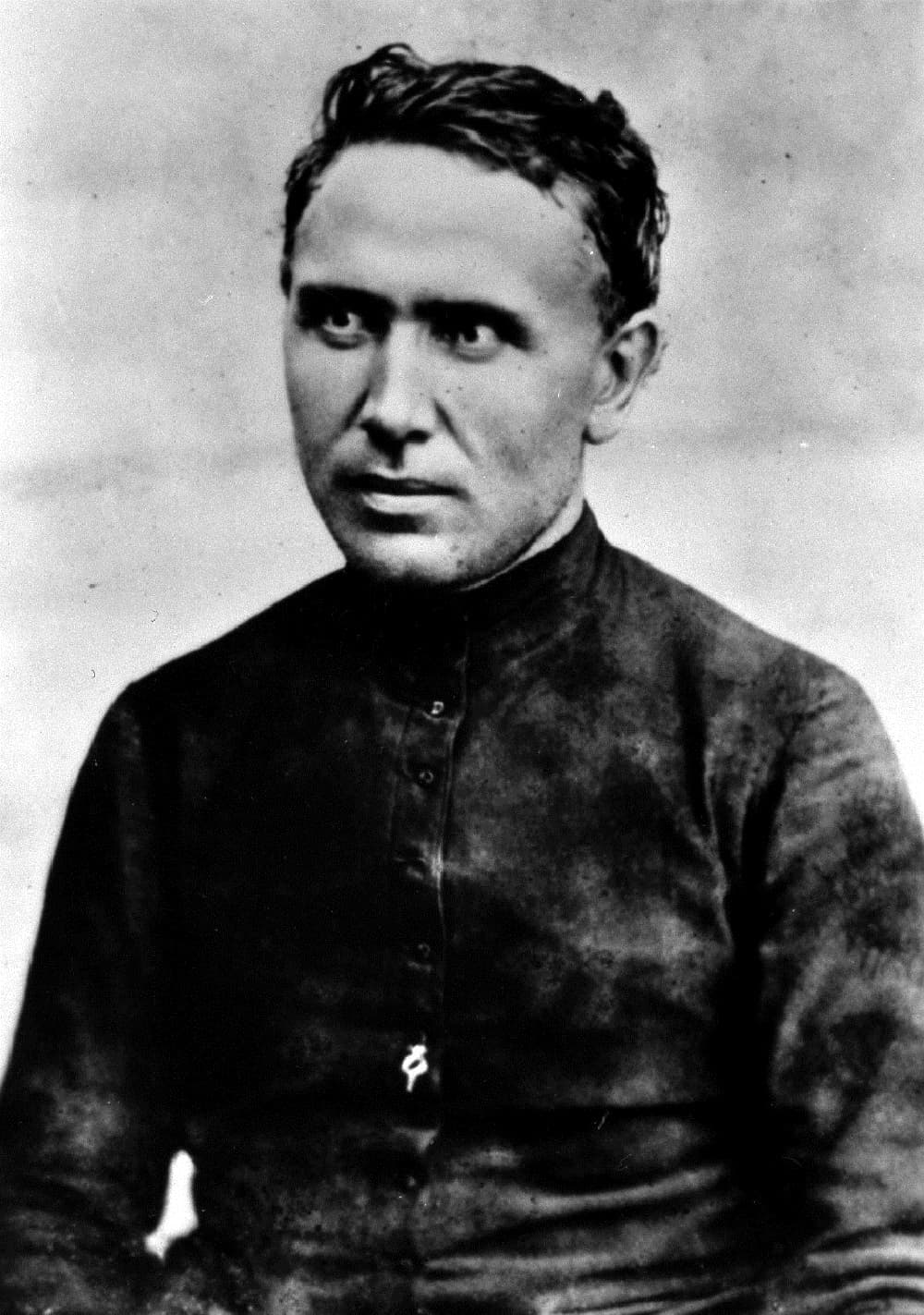
Father Damien of Molokai, photograph by Henry L. Chase, 1878 · Public Domain
Why He Matters
Damien shows that love for people in desperate circumstances is proven by physical presence and sustained commitment, not distant charity. He accepted the same disease and death he had come to help others face, and did not leave.
Virtue for Today
Presence
Try Today
Spend time today with someone who is isolated, sick, or hard to be around, rather than helping them from a distance.
Jozef De Veuster was born on January 3, 1840, in Tremelo, Belgium, the seventh of eight children of a farming family. He joined the missionary Congregation of the Sacred Hearts of Jesus and Mary in 1859, taking the religious name Damien after a fourth-century physician-martyr. When his older brother, also a priest in the same congregation, fell ill and could not travel to a planned mission in Hawaii, Damien asked to go in his place. He arrived in Honolulu in 1864 and was ordained a priest there that same year.
The Settlement at Kalawao
In 1865, alarmed by the spread of leprosy (Hansen's disease), the Hawaiian Kingdom's government began forcibly relocating anyone diagnosed with the disease to an isolated peninsula on the island of Molokai, cut off from the rest of the island by sea cliffs. Conditions in the settlement, first at Kalawao, were desperate: little medical care, minimal law and order, and, in the early years, no resident priest. In 1873, at age thirty-three, Damien volunteered to go to Molokai himself, initially for a temporary assignment that became permanent when his bishop allowed him to stay.
"We Lepers"
Damien did far more than say Mass. He built a water supply system, constructed hundreds of coffins and dug graves himself, dressed patients' wounds, built homes and a hospital, and worked to establish some basic order and dignity in a community many outsiders had simply written off. He wrote to his brother that he had chosen to make himself "a leper with the lepers, to gain all to Jesus Christ" — and from early in his ministry, he began referring to the community in his sermons not as "my brethren" but as "we lepers," a small linguistic choice that marked a total identification with the people he served, years before the disease affected him personally.
Diagnosis and Final Years
In December 1884, Damien noticed he had lost sensation in his foot while soaking it in scalding water — a classic symptom of leprosy's nerve damage. He had contracted the disease himself, almost certainly through years of close physical contact with patients: dressing wounds, sharing meals, hearing confessions face to face. He continued working as his own health declined, training helpers, expanding the settlement's infrastructure, and welcoming the eventual arrival of other priests, nuns (notably Mother Marianne Cope, later also canonized), and doctors who came to share the work he had begun essentially alone. He died at Kalawao on April 15, 1889, at age forty-nine, having spent his final sixteen years entirely within the settlement.
Canonization
Damien's story became internationally known during his lifetime, in part through a famous public defense written by Robert Louis Stevenson after a Protestant minister publicly disparaged Damien's character. He was canonized by Pope Benedict XVI in 2009. He remains one of the most visible modern examples of a missionary vocation lived out not from a safe distance but through literal, sustained physical presence among people everyone else had abandoned.
Helper
Reflection Questions:
- Damien chose to say "we lepers" rather than "my brethren" long before he had the disease himself. What would it look like for you to speak about people who are suffering as "we" instead of "them"?
- He took on a settlement most people considered a death sentence to avoid, not a mission field to embrace. What need in your own community do people tend to avoid rather than enter?
- His diagnosis came after years of small, repeated physical closeness — touching wounds, sharing cups, sitting close in confession. What ordinary acts of closeness might cost you something, but are exactly what someone else needs?
- He built water systems, coffins, and homes alongside saying Mass, treating practical labor as part of his priesthood, not separate from it. Where do you draw an artificial line between "spiritual" work and "practical" work in your own service to others?
- Damien is remembered for staying when he could have left. What is one commitment in your life right now that is easier to abandon than to keep — and what would it take to stay?
Short Prayer
“St. Damien of Molokai, pray for us — that we may love people in person, even when it costs us comfort or safety. Amen.”
Prayer to St. Damien of Molokai
Prayer to St. Damien of Molokai St. Damien, you left your home and your safety to live among people that an entire society had exiled and forgotten, and you did not merely visit them — you stayed, you touched their wounds, you buried their dead, and in the end you shared their disease and their death. Pray for us when we are tempted to help people only from a safe distance. Give us the courage to draw close to those our world finds easiest to isolate: the sick, the addicted, the imprisoned, the forgotten. Help us believe, as you did, that real love is proven in presence. St. Damien, pray for us. Amen.
Britannica — "St. Damien of Molokai"; EWTN — "Blessed Father Damien: Servant of Humanity"
Grow closer to God.
Agnioz is here to walk with you.
Register for FREE and unlock more Catholic content, prayers, and reflections to help you become a more enlightened Catholic — FREE FOREVER.


Let's grow together in faith, hope, and love. 🙏