
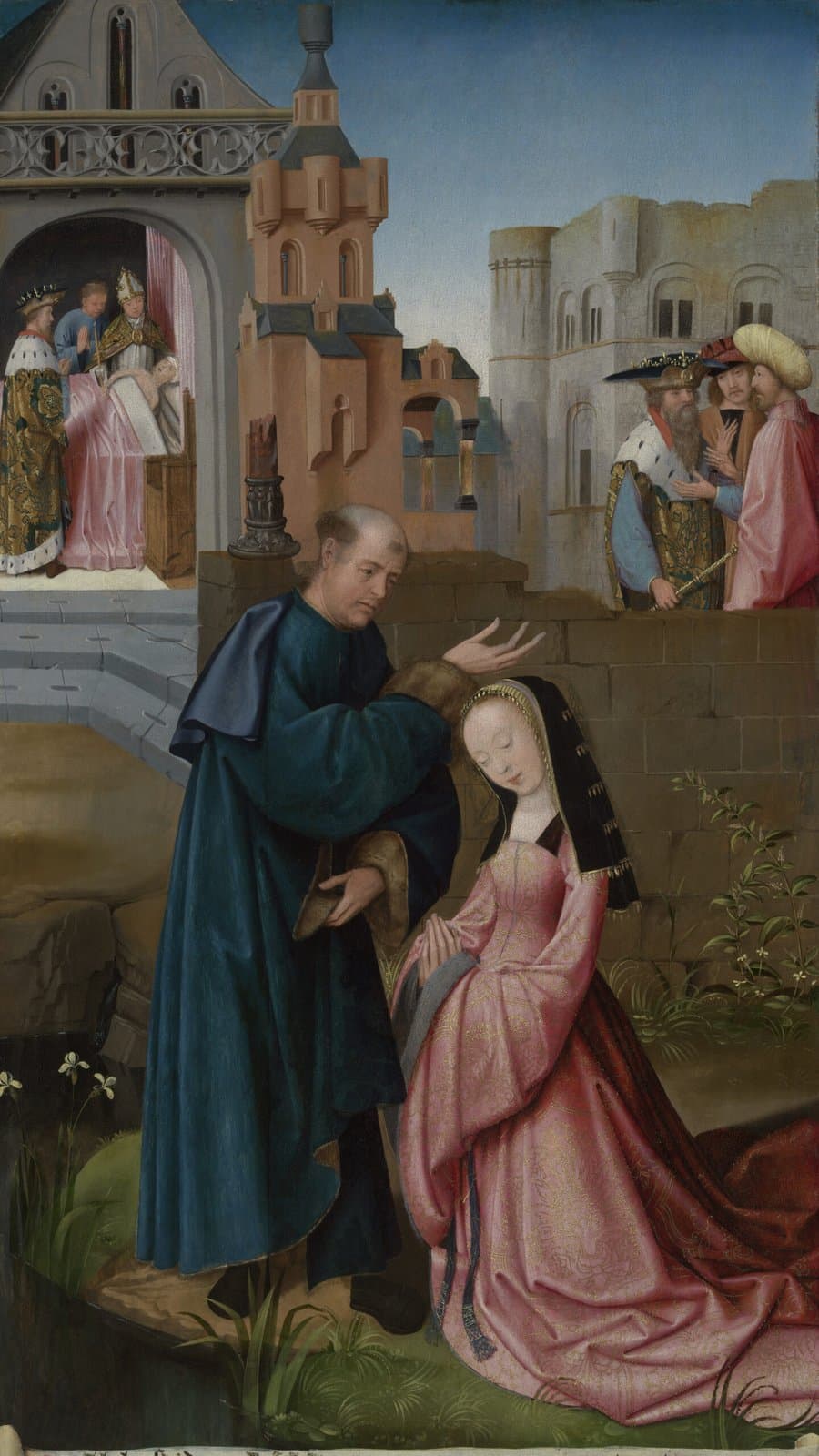
The Life of Saint Dymphna (Dymphna baptized by Gerebernus), altarpiece panel by Goswin van der Weyden, 1503–1505, The Phoebus Foundation · Public Domain
Why She Matters
Dymphna shows that fleeing danger rather than enduring it can itself be an act of courage and faith, and her story gave rise, through the town of Geel, to one of the oldest and most humane models of community care for mental illness in Western history. She matters to survivors of family trauma or abuse, and to anyone whose life is touched by mental illness in themselves or someone they love.
Virtue for Today
Refuge for the Afflicted
Try Today
Reach out today to someone you know who struggles with mental illness, anxiety, or past trauma, simply to check in without an agenda.
An Irish Princess in Grief
According to the tradition recorded in her medieval Life, written centuries after her death by a local Belgian clergyman drawing on oral accounts, Dymphna was the daughter of a pagan Irish chieftain and a devoutly Christian mother, born around the seventh century. Her mother died when Dymphna was still young, plunging her father into a grief that tradition describes deepening into a serious mental derangement. Advisors reportedly urged him to remarry, and he insisted on finding a new wife who resembled his late wife closely enough — until, disturbingly, his attention settled on his own daughter, who had grown to resemble her mother.
Flight to Belgium
Terrified and unwilling to submit to her father's demands, Dymphna fled Ireland, accompanied by her confessor and spiritual guide, a priest named Gerebernus, along with a small group of loyal companions. Tradition holds they crossed to continental Europe and eventually settled near Antwerp, in the small town of Geel, in what is now Belgium, where Dymphna used part of her wealth to fund care for the poor and the sick, reportedly including people already suffering from mental illness in the area.
Discovered and Martyred
Her father eventually traced her to Geel. When Dymphna again refused his demands, he flew into a rage; his soldiers killed Gerebernus, and, according to the oldest surviving version of the story, her father personally beheaded Dymphna himself in his fury — she was around fifteen years old. Local Christians recovered and buried the bodies, and reports of healing and comfort among the mentally afflicted at her grave site began circulating not long after, growing into a formal veneration confirmed with her canonization around 1247.
Geel: Seven Centuries of Community Care
What sets Dymphna's legacy apart from most saints is not only her story but its direct, sustained practical effect. Word of healings associated with her relics drew increasing numbers of people suffering from mental illness and epilepsy to Geel seeking a cure, and the town's residents, over succeeding centuries, developed an unusual and remarkably humane response: rather than confining or institutionalizing these pilgrims, local families began taking them in as boarders, treating them as members of the household and the wider community rather than as patients to be managed or hidden away. This informal system, still functioning in adapted form today, is now recognized by mental health historians as one of the earliest and longest-running examples of community-based psychiatric care anywhere in the world — a direct, seven-century-long practical legacy of one young woman's martyrdom.
Helper
Reflection Questions:
- Dymphna fled a genuinely dangerous situation at real personal cost rather than remain in it. Is there a situation in your own life you know you need to leave, and what is keeping you from doing so?
- Her father's grief, left unaddressed, deepened into something that endangered the people closest to him. Have you seen unprocessed grief in your own life or someone else's turn destructive over time?
- The town of Geel responded to suffering people by welcoming them into ordinary households rather than isolating them. How do you personally tend to respond to people struggling visibly with mental illness — with welcome, or with distance?
- Dymphna used her own resources to help the sick and poor even while she herself was in danger and exile. Have you ever helped someone else while you yourself were still struggling?
- Geel's model of care has lasted seven centuries specifically because ordinary community members, not only professionals, chose to participate in it. What role could you personally play in supporting someone's mental health, beyond simply referring them to professional help?
Short Prayer
“St. Dymphna, patroness of those with mental illness, pray for us and for all who suffer silently. Amen.”
Prayer to St. Dymphna
Prayer to St. Dymphna St. Dymphna, you fled real danger at the cost of your own life rather than remain in a situation that threatened you, and the town that sheltered your memory turned your story into centuries of welcome for people suffering from mental illness. Pray for anyone today living with anxiety, depression, trauma, or any affliction of the mind, that they would find not isolation but the kind of ordinary, dignified welcome Geel has offered for seven hundred years. Pray, too, for families struggling with a loved one's grief or mental illness left too long unaddressed. Help us respond to people who are struggling with patience and welcome rather than fear or distance. St. Dymphna, Lily of Éire, pray for us. Amen.
Catholic Answers — "Saint Dymphna, Patron Saint of Mental Illness"; Britannica — "St. Dymphna"

Grow closer to God.
Agnioz is here to walk with you.
Register for FREE and unlock more Catholic content, prayers, and reflections to help you become a more enlightened Catholic — FREE FOREVER.


Let's grow together in faith, hope, and love. 🙏