
St. Gregory the Great: The Pope Who Called Himself a Servant
540 – 604
“Servus servorum Dei — servant of the servants of God.”
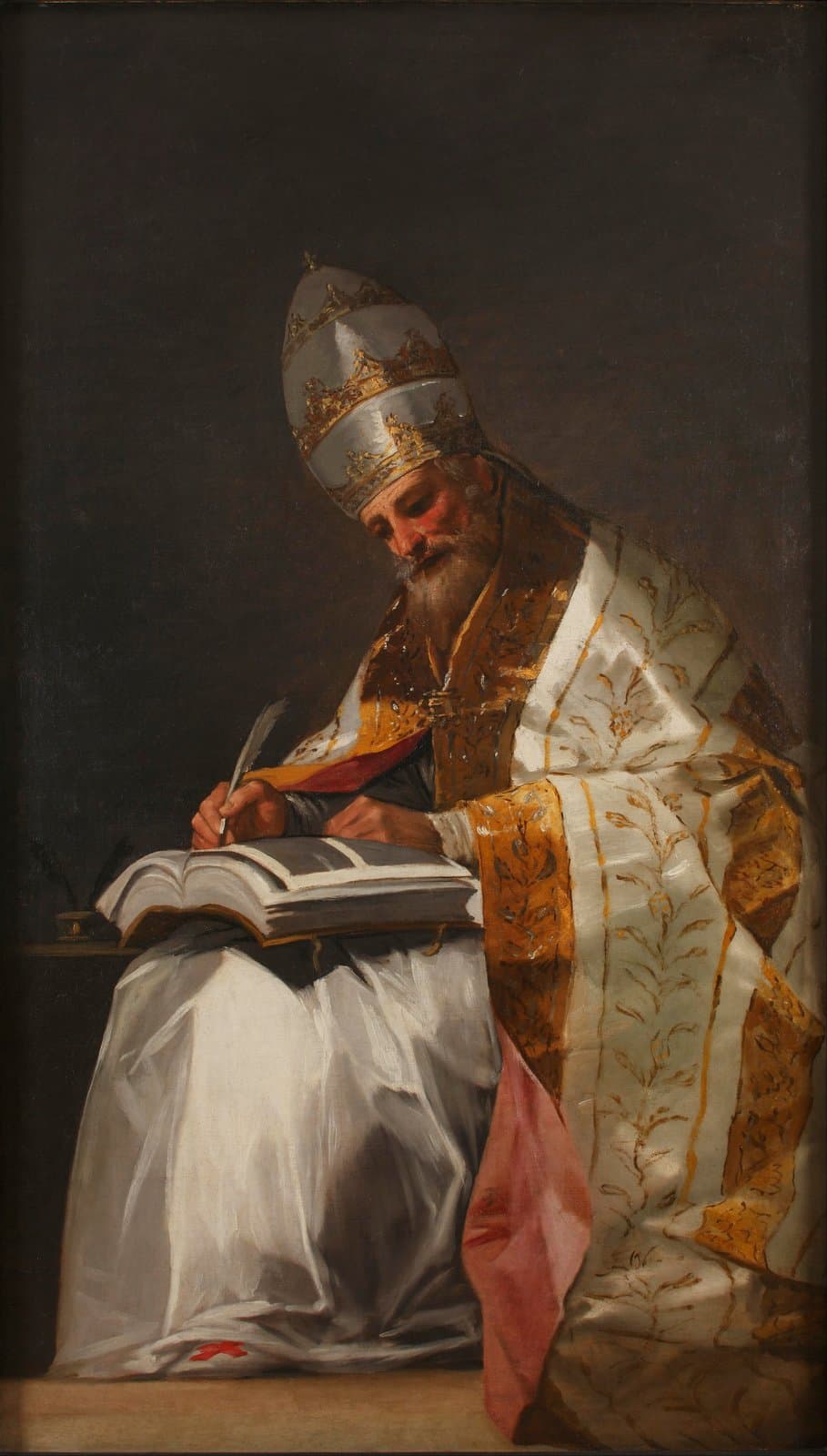
Saint Gregory the Great, painting by Francisco de Goya, 1796-99 · Public Domain
Why He Matters
Gregory reshaped the papacy into an office of practical service to the poor and the whole Church, sent the mission that brought Christianity to England, and modeled humble leadership from the Church's highest position. He matters because he shows that real authority is measured by how well it serves, not how much it commands.
Virtue for Today
Humble Service
Try Today
Do one act of hidden, humble service today without seeking any credit for it.
From Roman Prefect to Reluctant Monk
Gregory was born around 540 into a wealthy, distinguished Roman family with a tradition of public service — his family had already produced two popes. He followed the expected path and became prefect of Rome, the city's highest civil office, while still a young man. But sometime in his thirties he gave up that career, converted his family's Roman villa into a monastery, and used the rest of his considerable inheritance to found six more monasteries in Sicily, entering monastic life himself as a simple monk. He later described this period of quiet prayer and study as the happiest of his life — which makes what came next feel, by his own account, more like a sacrifice than an ambition realized.
An Unwanted Election
Gregory was pulled out of monastic life to serve as a papal ambassador to Constantinople and then as an abbot in Rome, gaining exactly the administrative experience that would soon be needed. When Pope Pelagius II died during a plague in 590, Gregory was elected his successor by acclamation. He reportedly tried to refuse and even attempted to flee the city, but was found, brought back, and consecrated pope regardless. From the humility of his own account, and from the burden he clearly felt at trading contemplative life for the papacy, comes one of his most enduring contributions to the Church: he was the first pope to sign himself habitually as "servus servorum Dei" — servant of the servants of God — a title every pope after him has kept.
A Pope Who Governed Like a Steward
Gregory inherited a Rome in crisis: plague, famine, and the constant threat of Lombard invasion, with the old imperial administration in the East too distant and distracted to help. He organized the Church's own resources to feed the hungry, personally kept detailed records of Church revenue so it could be systematically distributed to the poor, and negotiated directly with the Lombards to protect the city when no one else would. He also sent the monk Augustine of Canterbury on a mission to evangelize England in 596 — a mission that would eventually bring Christianity to the Anglo-Saxon kingdoms and permanently reshape English history.
Preacher, Writer, and Reformer of Worship
Gregory wrote extensively despite his heavy administrative burdens, including the Pastoral Rule, a practical guide for bishops on the demands and temptations of spiritual leadership that remained required reading for medieval bishops for centuries, and the Dialogues, a collection of lives and miracles of Italian saints including St. Benedict. He is also traditionally associated with the reform and codification of Roman liturgical chant that came to bear his name, Gregorian chant, though the precise extent of his personal role in its development remains debated by scholars.
Doctor of the Church
Gregory served as pope until his death in 604, having reshaped the papacy into an institution capable of practical governance as well as spiritual leadership. He was recognized as one of the four original Doctors of the Latin Church, and his insistence on humble service even from the Church's highest office remains a standard against which later leadership is still measured.
Helper
Reflection Questions:
- Gregory left monastic life reluctantly, believing it was the happiest season of his life, in order to serve a Church in crisis. What comfortable season of your own life might God be asking you to set aside for the sake of others?
- He chose to sign himself "servant of the servants of God" specifically because he now held the Church's highest office. Where does more authority or responsibility in your own life tempt you toward pride rather than service?
- He kept meticulous records of Church wealth specifically so it could be given away efficiently to the poor. How organized and intentional is your own giving?
- He sent missionaries to a country he would never personally visit, trusting the long-term fruit of work he wouldn't see completed. What are you investing in whose outcome you may never witness?
- Gregory tried to avoid the responsibility he was given, yet fulfilled it faithfully once it came. When has reluctant obedience turned out to be exactly where you needed to be?
Short Prayer
“St. Gregory the Great, pray for us — that whatever authority or responsibility we hold, we may carry it as servants, not masters. Amen.”
Prayer to St. Gregory the Great
Prayer to St. Gregory the Great St. Gregory, you left behind the quiet monastic life you loved to govern a Church and a city in crisis, and you did it by giving yourself the title "servant of the servants of God" rather than claiming honor for yourself. You fed the hungry, negotiated for peace, and sent missionaries to peoples you would never meet, trusting God with the outcome. Pray for us in whatever leadership or responsibility we carry, however small, that we might exercise it the way you did: attentively, humbly, and for the good of others rather than ourselves. Help us find, as you did, that true greatness is found in faithful service. St. Gregory the Great, pray for us. Amen.
Vatican News — St. Gregory the Great, Pope and Doctor of the Church
Grow closer to God.
Agnioz is here to walk with you.
Register for FREE and unlock more Catholic content, prayers, and reflections to help you become a more enlightened Catholic — FREE FOREVER.


Let's grow together in faith, hope, and love. 🙏