St. John Bosco: The Priest Who Built a Playground Into a Vocation
1815 – 1888
“It is not enough to love the young; they must know that they are loved.”
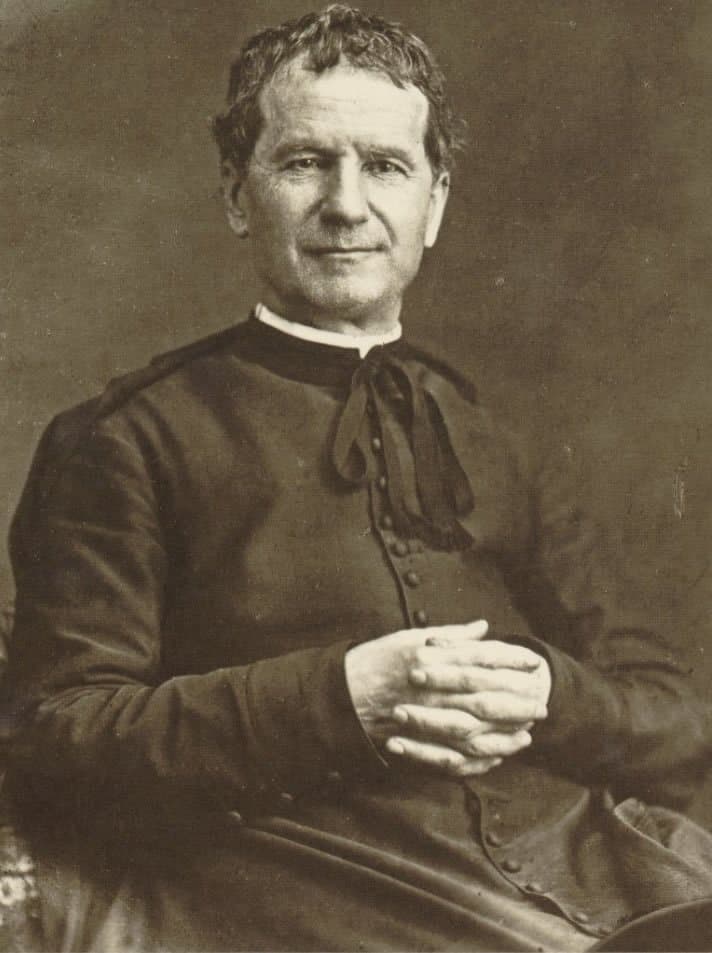
Don Bosco, photograph taken in Turin, 1880, attributed to Carlo Felice Deasti · Public Domain
Why He Matters
Bosco built a worldwide youth movement on the radical-for-his-time idea that street children respond better to patient kindness than to punishment. He matters because he shows that real love has to be communicated clearly enough that the other person actually feels it — good intentions alone are not the same as love received.
Virtue for Today
Loving-Kindness
Try Today
Tell or show someone in your care today, plainly and specifically, that you love them — do not assume they already know.
A Poor Boyhood in Piedmont
Giovanni Melchiorre Bosco was born in 1815 in Becchi, a small hamlet in the Piedmont region of northern Italy, the youngest son of a peasant farmer who died when John was only about two years old. His mother, Margaret, raised her sons largely alone through hard manual labor and the charity of neighbors, and the family's poverty meant that formal schooling was a genuine struggle to obtain; John learned to read partly through the informal tutoring of a local priest, and villagers pooled resources to help outfit him for seminary when the time came.
A Dream That Shaped a Vocation
John later wrote that at around age nine he had a vivid dream in which he saw a crowd of poor, rough street children fighting and swearing, and a mysterious figure told him he would win such children over not by force but by gentleness and love, saying simply, "not with blows, but with meekness and charity." In the dream, as he began speaking kindly to the children, they transformed into gentle lambs. Whether taken as a literal premonition or a formative childhood impression he returned to for the rest of his life, Bosco treated it as a guiding vision for his eventual ministry, and gentleness toward difficult children became the deliberate center of his entire approach.
Priesthood Among Turin's Street Children
Ordained a priest in 1841, Bosco was assigned to Turin, a rapidly industrializing city drawing large numbers of poor rural migrants, including many boys who arrived seeking factory work with no family support, no education, and frequently ended up in prison before they turned eighteen. Bosco was reportedly shocked by what he saw in the city's jails and resolved to intervene earlier, before boys ever reached that point. He began gathering neglected and homeless boys informally on Sundays for what he called an "Oratory" — a mix of games, catechism, basic schooling, and, notably, no corporal punishment, at a time when harsh physical discipline of children was still widely accepted practice.
A Method Built on Kindness
Bosco called his approach the "Preventive System," built on reason, religion, and what he termed "loving-kindness" rather than fear. He later stated the underlying principle directly: it was not enough to love young people, they had to actually know and feel that they were loved, or the love did no good. He organized workshops teaching trades, built dormitories for boys with nowhere else to live, and developed one of the era's more forward-looking approaches to juvenile education, anticipating ideas that would only later become mainstream in child psychology and pedagogy.
Founding the Salesians
To make this work sustainable beyond his own lifetime, Bosco formally founded the Salesian Society in 1859, naming it after St. Francis de Sales (also in this library) in honor of that saint's own gentleness and patience. Pope Pius IX gave initial approval in 1858, with full papal sanction following in 1874. Bosco also partnered with St. Maria Domenica Mazzarello to found the Daughters of Mary Help of Christians, extending the same mission to girls.
Father and Teacher of Youth
John Bosco died in Turin on January 31, 1888, and was canonized in 1934 by Pope Pius XI, who later named him patron of young people, apprentices, and Catholic publishers. The Salesian order he founded became one of the largest religious congregations in the world, still running schools, youth centers, and vocational programs on every inhabited continent on the same founding principle: that troubled young people are usually better reached with patience and evident love than with punishment.
Helper
Reflection Questions:
- Bosco built his entire method around the conviction that discipline works better through kindness than fear. Where in your own relationships do you default to correction instead of patience?
- He said it is not enough to love someone — they have to actually know they are loved, or it does them no good. Is there someone in your life who might not know how much you care, simply because you have not shown it?
- He responded to what he saw in Turin's jails by intervening earlier, before boys ever ended up there. What early, preventive step could you take on a problem you usually only address after it has already gotten worse?
- He built workshops and trade schools, not just religious instruction, believing boys needed real skills and a future, not only good intentions. How do you combine practical help with spiritual care for people you support?
- He turned his own difficult, poor childhood into the source of unusual compassion for children in exactly his old situation. How might your own hardest experiences equip you to help someone else going through something similar?
Short Prayer
“St. John Bosco, friend and father of the young, pray for us — that we may love others in ways they can actually feel. Amen.”
Prayer to St. John Bosco
Prayer to St. John Bosco St. John Bosco, you grew up poor and largely without schooling yourself, yet you gave your whole priesthood to the street children of Turin whom almost everyone else had written off. You taught that love which is only felt by the one giving it does no good — it has to be plain enough for the other person to actually receive it. Pray for us as we try to love the difficult people in our lives, especially the young people who test our patience the most. Help us choose gentleness over anger, and help us make sure the people we love actually know it. St. John Bosco, pray for us. Amen.
EWTN, "Saint John Bosco, Founder of the Salesian Society"; John Bosco, Memoirs of the Oratory
Grow closer to God.
Agnioz is here to walk with you.
Register for FREE and unlock more Catholic content, prayers, and reflections to help you become a more enlightened Catholic — FREE FOREVER.


Let's grow together in faith, hope, and love. 🙏