
St. José Sánchez del Río: "Viva Cristo Rey"
1913 – 1928
“¡Viva Cristo Rey! (Long live Christ the King!)”
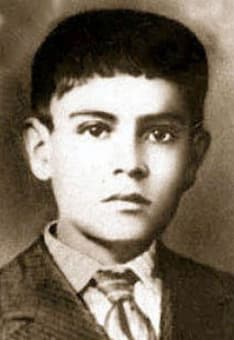
St. José Sánchez del Río, portrait photograph, photographer unknown, early 20th century · Public Domain
Why He Matters
José shows that youth is no barrier to serious conviction or real courage, and that a fourteen-year-old can hold to a belief under torture that many adults never get tested on at all.
Virtue for Today
Fearless Faith
Try Today
Identify one belief you hold that you have never had to defend at real cost, and think honestly about whether you would.
José Luis Sánchez del Río was born on March 28, 1913, in Sahuayo, in the Mexican state of Michoacán, the third of four children. Known as "Joselito" to his family, he grew up during a period of severe government hostility toward the Catholic Church in Mexico, which sharpened dramatically after President Plutarco Elías Calles began strictly enforcing anticlerical provisions of the Mexican Constitution in 1926 — closing churches and religious schools, expelling foreign clergy, and effectively outlawing much of ordinary Catholic religious practice.
The Cristero War
Catholic resistance to these laws erupted into an armed uprising known as the Cristero War (1926–1929), fought under the rallying cry "¡Viva Cristo Rey!" ("Long live Christ the King!"). José's two older brothers joined the Cristero fighters, and José, then thirteen, repeatedly asked his parents for permission to join as well. His mother initially refused, considering him too young, but eventually relented to his persistence, and he joined a Cristero unit as a flag-bearer and aide, too young for regular combat duty but eager to contribute to the cause in whatever way he could.
Capture
In February 1928, during a battle near Cotija, José gave up his horse to help a wounded Cristero commander escape, and was himself captured by federal government forces as a result. His captors initially tried to use his young age as leverage, offering to spare his life if he would publicly renounce his faith and shout "Death to Christ the King" in place of the Cristero slogan. José refused, repeatedly, despite what followed.
Torture and Martyrdom
Over the roughly two weeks he was held prisoner, José's captors subjected him to severe torture intended to break his resolve, including cutting the soles of his feet and forcing him to walk on the wounds. Witnesses reported that he continued praying and refused every renewed demand that he curse his faith. On February 10, 1928, he was taken to a cemetery and executed. Accounts from witnesses at his execution describe him tracing a cross on the ground with his own blood before he was killed, and crying out "¡Viva Cristo Rey! ¡Viva la Virgen de Guadalupe!" ("Long live Christ the King! Long live the Virgin of Guadalupe!") as his final words. He was fourteen years old.
Canonization
José's cause for canonization moved forward decades later as part of the Church's broader recognition of the Cristero martyrs. He was beatified by Pope Benedict XVI on November 20, 2005, and Pope Francis canonized him on October 16, 2016, after approving a miracle attributed to his intercession. He is honored today as a patron of young people and of persecuted Christians, one of the youngest lay martyrs recognized by the modern Church.
Helper
Reflection Questions:
- José was initially told he was too young to fight, and found another way — as a flag-bearer and aide — to support a cause he believed in. Where might you contribute meaningfully to something important, even without taking the most visible role?
- His captors specifically targeted his young age, assuming a boy could be pressured into renouncing his faith. Have you ever been underestimated in a way that turned out to reveal real strength?
- He was offered a way out — one public statement — that would have ended his suffering immediately. What smaller "way out" have you been tempted to take, at the cost of something you actually believe?
- Witnesses describe him praying throughout his captivity and torture, rather than simply enduring it in silence. What role does active prayer, rather than passive endurance, play in how you get through hard seasons?
- His final words connected his personal faith to a specific devotion, the Virgin of Guadalupe, rooted in his own culture and country. How does your own cultural or family heritage shape the specific way you express faith?
Short Prayer
“St. José Sánchez del Río, pray for us — that young people everywhere would have your courage to hold fast to what they believe. Amen.”
Prayer to St. José Sánchez del Río
Prayer to St. José Sánchez del Río St. José, you were only fourteen years old when you were offered an easy way out of unbearable suffering, and you refused it, holding on to your faith through torture that would have broken most adults. You died with the name of Christ the King and Our Lady of Guadalupe on your lips. Pray for young people today facing pressure to abandon what they believe for an easier path. Give us even a fraction of your courage in the smaller tests we face, and pray for persecuted Christians around the world who still risk everything for their faith today. St. José Sánchez del Río, pray for us. Amen.
Vatican.va — Canonization homily of Pope Francis, October 16, 2016; Catholic News Herald — "St. José Sánchez del Río: Teenage martyr for the faith"
Grow closer to God.
Agnioz is here to walk with you.
Register for FREE and unlock more Catholic content, prayers, and reflections to help you become a more enlightened Catholic — FREE FOREVER.


Let's grow together in faith, hope, and love. 🙏