
St. Louise
de Marillac: The Widow Who Organized Mercy
1591 – 1660
“Be very gentle and courteous toward your poor. You know that they are our masters and that we must love them tenderly and respect them deeply.”
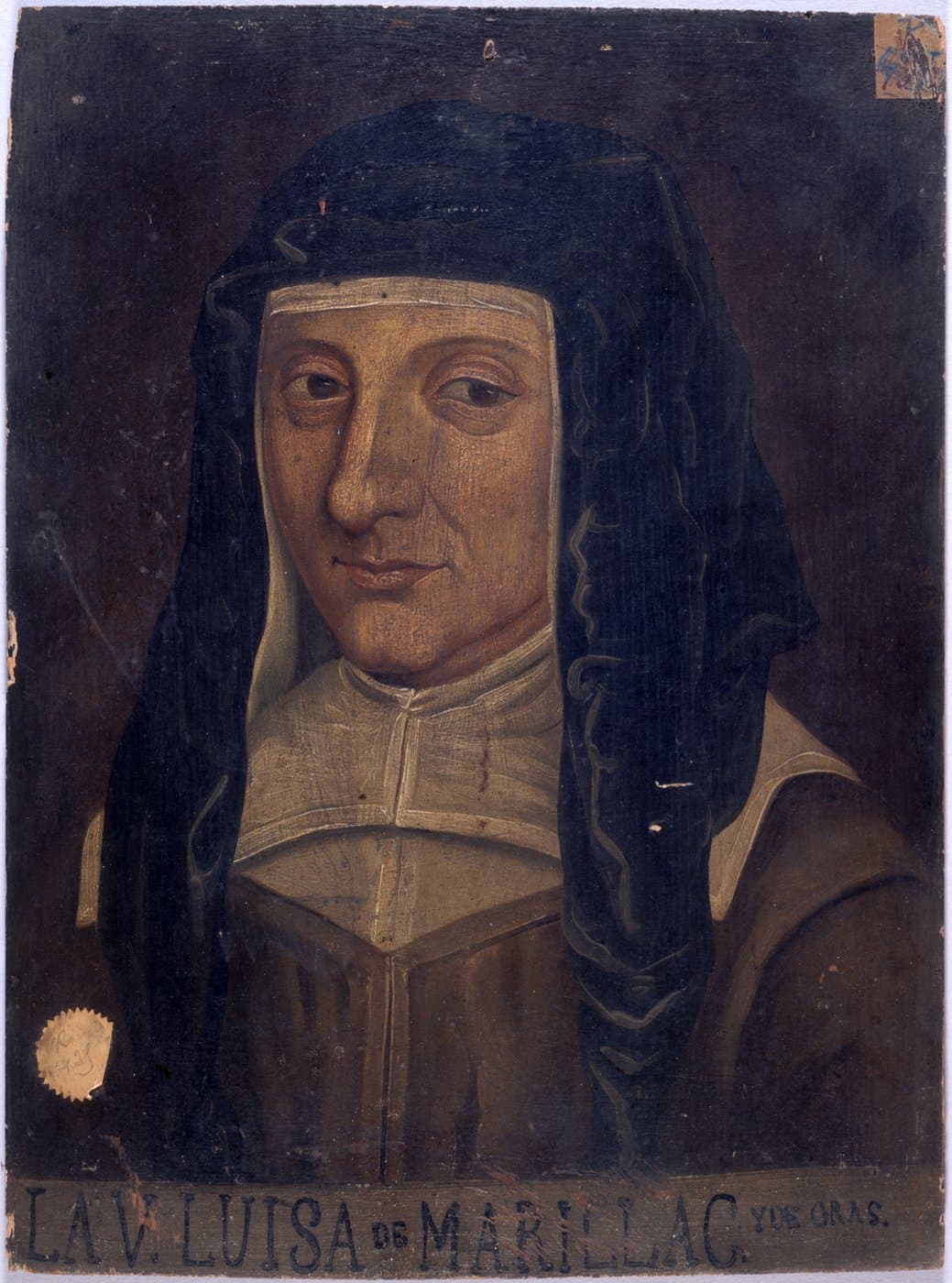
Portrait de Louise Legras, née de Marillac, anonymous painting, Musée Carnavalet, c. 1660 · Public Domain
Why She Matters
Louise organized and led one of the first religious communities of women to serve the poor directly in the streets and hospitals rather than from behind convent walls. She matters because she treated administrative and organizational work — visiting, training, writing, correcting — as a genuine form of holiness, not a distraction from it.
Virtue for Today
Practical Charity
Try Today
Do one practical, unglamorous task today — an errand, a phone call, some organizing — as an act of care for someone else, not just as a chore.
An Uncertain Beginning
Louise de Marillac was born on August 12, 1591, likely in or near Paris, into the influential and aristocratic de Marillac family. Her early life was marked by uncertainty; her exact parentage was never fully acknowledged in the way legitimate children of the era expected, and she was raised largely by relatives and educated at a Dominican convent school, where she received a genuinely rigorous education, including philosophy, well beyond what was typical for women of her time. As a young woman she hoped to enter religious life as a Capuchin nun, but was turned away, reportedly on account of her fragile health, a rejection that left her uncertain about her vocation for years.
Marriage and Widowhood
In 1613, Louise married Antoine Le Gras, a secretary in service to the French queen mother, and the couple had one son, Michel. Antoine fell seriously ill years into the marriage and died in 1625, leaving Louise a widow in her mid-thirties, still troubled by old doubts about whether she had missed a religious calling by marrying at all. Around this time she came under the spiritual direction of a priest who would shape the rest of her life: Vincent de Paul (also in this library), already known for organizing charitable relief for the rural and urban poor of France.
Vincent de Paul's Trusted Organizer
Vincent had already begun forming lay "Confraternities of Charity," groups of well-off women who raised funds and organized relief efforts for the poor, but he recognized these groups needed more consistent, hands-on leadership and formation than volunteers could easily provide. He came to trust Louise's practical judgment and organizational ability enough to send her, beginning in 1629, to personally visit and reorganize these Confraternities across France — grueling travel for a woman of the era, often over poor roads and in difficult conditions, but work Louise pursued with real determination.
Founding the Daughters of Charity
Out of this work grew something genuinely new: on November 29, 1633, Louise and Vincent formally founded the Daughters of Charity, a community of women dedicated to serving the sick and poor directly, in their own homes and in hospitals, rather than living cloistered behind convent walls in the traditional pattern of women's religious life. This was a significant departure from convention, and Louise described their intended way of life plainly: their convent would be the sick person's room, their chapel the parish church, their enclosure the streets of the city. She trained the community's earliest members personally, wrote extensively to guide them, and insisted repeatedly that the sisters treat the poor they served with real tenderness and respect, not merely efficient charity — Louise called the poor "our masters," insisting the sisters serve them with gentleness rather than condescension.
Decades of Growth
Louise spent the following decades building the young community's structure, formation, and rule of life, corresponding constantly with individual sisters serving in hospitals, foundling homes, and parishes across France — hundreds of her letters survive, offering a detailed record of exactly how she wanted the community to treat the people in their care. By the time she and Vincent de Paul both died within months of each other in 1660, the Daughters of Charity had grown to more than forty houses across France.
Servant of the Sick Poor
Louise died in Paris on March 15, 1660, and was canonized in 1934 by Pope Pius XI, who later named her patroness of social workers. The Daughters of Charity she organized became one of the largest women's religious communities in the world, and the noncloistered, hands-on model of religious life she helped pioneer influenced how the Church has organized active charitable religious communities ever since.
Helper
Reflection Questions:
- Louise spent years unsure whether she had missed her true vocation by marrying instead of entering religious life. Have old doubts about a path not taken ever kept you from fully embracing the path you actually are on?
- She insisted her sisters treat the poor as "our masters," to be served with tenderness rather than mere efficiency. Do you serve the people who depend on you with real warmth, or just competence?
- She traveled difficult roads for years reorganizing charitable groups most people would have found tedious, unglamorous administrative work. What unglamorous, necessary work in your own life deserves more of your real effort?
- She helped pioneer a religious life with no convent walls, insisting the sisters' "enclosure" would be the streets themselves. Where might you need to leave your comfort zone to actually reach the people who need you?
- Hundreds of her letters survive, most of them just practical guidance to individual sisters doing hard, unnoticed work. What practical encouragement could you offer someone today who is doing hard, unnoticed work?
Short Prayer
“St. Louise de Marillac, pray for us — that we may serve those in need with real tenderness, not just efficiency. Amen.”
Prayer to St. Louise de Marillac
Prayer to St. Louise de Marillac St. Louise, widowed young and unsure for years whether you had missed your true calling, you found your vocation not in a cloister but in the hard, practical work of organizing real help for the sick and the poor. You insisted your sisters treat the poor as their masters, deserving tenderness and respect, not mere efficient charity. Pray for us in our own uncertainty about our path, and in the unglamorous, practical work most of us are called to. Help us serve the people who depend on us with real warmth, not just competence. St. Louise de Marillac, pray for us. Amen.
Encyclopaedia Britannica, "St. Louise de Marillac"; Louise de Marillac, Correspondence (Spiritual Writings)

Grow closer to God.
Agnioz is here to walk with you.
Register for FREE and unlock more Catholic content, prayers, and reflections to help you become a more enlightened Catholic — FREE FOREVER.


Let's grow together in faith, hope, and love. 🙏