St. Padre Pio: The Friar Who Heard Confessions Nineteen Hours a Day
1887 – 1968
“Pray, hope, and don't worry.”
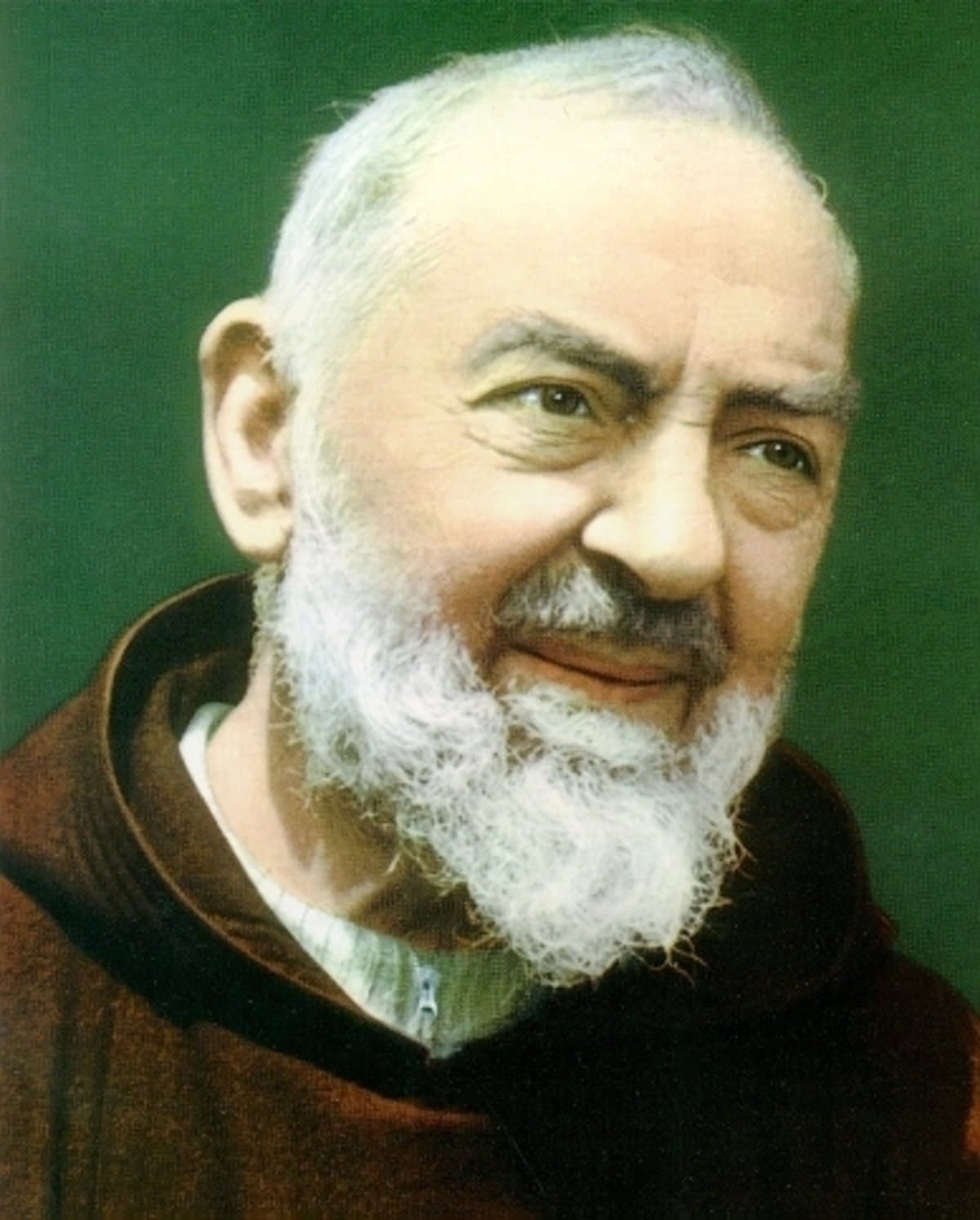
Padre Pio, portrait photograph, c. 1947 · Public Domain (PD-Italy, 20 years after creation; not restored by URAA)
Why He Matters
Padre Pio bore the visible wounds of Christ for fifty years, spent decades under Church suspicion without ever abandoning his ministry, and became one of the most sought-after confessors of the twentieth century. He matters because he shows how to keep serving faithfully even while misunderstood, and how to turn suffering into intercession for others.
Virtue for Today
Trust
Try Today
Hand your biggest current worry over to God in prayer, specifically and by name.
A Stigmata That Would Not Fade
Francesco Forgione was born in 1887 in Pietrelcina, Italy, to a family of poor farmers. He entered the Capuchin Franciscans at fifteen, taking the name Pio, and was ordained a priest in 1910. Chronic illness kept him largely at home for years before he was finally able to live permanently in the friary at San Giovanni Rotondo in 1916, where he would remain for the rest of his life.
On September 20, 1918, while praying before a crucifix, Padre Pio received the stigmata — the wounds of Christ's crucifixion appearing visibly on his hands, feet, and side. He is the first priest in Church history recorded to bear them. The wounds bled periodically, produced a reported scent of flowers noted by many visitors, and remained visible for fifty years until his death — unlike other stigmatists whose marks were often temporary.
Suspicion Before Vindication
Padre Pio's growing fame drew intense scrutiny. Church authorities, including the influential Franciscan physician Fr. Agostino Gemelli, publicly doubted the authenticity of his wounds and mystical reports, and for a period in the 1920s–30s Vatican restrictions limited his public ministry and correspondence. Padre Pio submitted to every investigation without public complaint, continuing his priestly work under restriction. Decades later, the Vatican's position shifted decisively in his favor; he was beatified in 1999 and canonized by Pope John Paul II in 2002, who as a young priest had corresponded with him.
A Life of Confession and Compassion
Padre Pio became famous above all for hearing confessions — often ten to nineteen hours a day, with pilgrims waiting days for a slot, drawn by his reputation for reading souls and calling out sins penitents had not confessed. He was also reported to bilocate (appear in two places at once) and to read hearts, phenomena widely attested by visitors though never formally verified by the Church as doctrine. In 1956, with almost no resources, he opened the Casa Sollievo della Sofferenza ("House for the Relief of Suffering"), a major hospital that still operates today, born from his conviction that physical healing and spiritual care belonged together.
He died in 1968, still bearing the stigmata, which reportedly healed completely and left no scars within hours of his death.
Helper
Reflection Questions:
- Padre Pio endured decades of official Church suspicion without abandoning obedience or ministry. How do you respond when your integrity is doubted by people who should know better?
- He spent the bulk of his priesthood in a single small room, hearing confessions for nearly a full day at a time. What does his patience with sinners teach you about how you extend patience to others?
- He built a hospital from nothing, trusting the need would be met. Where is God asking you to act before you feel resourced enough?
- His wounds healed instantly at death, as if their purpose — uniting his suffering to Christ's — was now complete. How do you understand suffering that has no clear end date?
- Visitors traveled great distances and waited days just to speak with him for minutes. What would it look like for you to make time, however brief, fully present for someone in need?
Short Prayer
“Pray, hope, and don't worry. St. Padre Pio, pray for us. Amen.”
Prayer to St. Padre Pio
Prayer to St. Padre Pio St. Padre Pio, you carried the visible wounds of Christ for fifty years and spent nearly a full day at a time hearing confessions, offering pilgrims patience and insight even when you yourself were exhausted, doubted, and restricted by your own Church superiors. You taught simply and directly: pray, hope, and don't worry. Pray for us in our anxiety and our impatience, that we might trust God's timing the way you did through decades of scrutiny before your vindication. Help us bring our sins honestly to confession and our worries honestly to prayer, trusting that both are heard. St. Padre Pio, pray for us. Amen.
Vatican.va — Canonization homily, June 16, 2002
Grow closer to God.
Agnioz is here to walk with you.
Register for FREE and unlock more Catholic content, prayers, and reflections to help you become a more enlightened Catholic — FREE FOREVER.


Let's grow together in faith, hope, and love. 🙏